
As the demand for highly bioavailable and gut-friendly magnesium supplements continues to grow, magnesium glycinate has become one of the most sought-after ingredients on the market. However, manufacturers and formulators often encounter two distinct product types: pure fully-reacted magnesium glycinate and buffered magnesium glycinate. While both are labeled as magnesium glycinate, they differ significantly in chemical composition, functional properties, and suitable applications.
At Kangyo, we supply both forms of magnesium glycinate, allowing customers to choose the right ingredient based on their target formulations and end-user needs.
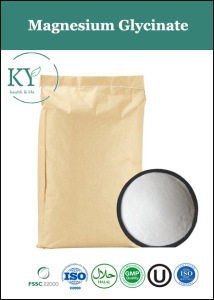
What Is Pure Fully-Reacted Magnesium Glycinate?
Pure fully-reacted magnesium glycinate is a true chelate formed by binding one magnesium ion with two glycine molecules (Mg(C₂H₄NO₂)₂). The complete reaction ensures that no free magnesium oxide, carbonate, or other unreacted magnesium salts remain. This form typically contains 14% elemental magnesium by weight.
Key characteristics:
-
Superior bioavailability via dipeptide transport pathways
-
Minimal laxative effect, as glycine facilitates absorption without drawing excess water into the intestines
-
No residual inorganic magnesium compounds
Primary applications:
-
Premium nutritional supplements targeting sleep support, stress relief, and mood balance
-
High-dose magnesium formulations for long-term therapeutic use
-
Products for individuals with gastrointestinal sensitivity (e.g., IBS, Crohn’s)
-
Clean-label and high-purity supplement lines
What Is Buffered Magnesium Glycinate?
Buffered magnesium glycinate is not a pure chelate. It is a blend of magnesium glycinate and an additional magnesium salt, most commonly magnesium oxide. The buffering process reduces the glycine content per unit of elemental magnesium, often to improve tablet compression characteristics or to provide a more economical option.
Key characteristics:
-
Mixture of chelated and inorganic magnesium
-
Typical elemental magnesium content: 18–30% (due to the inclusion of magnesium oxide)
-
Lower glycine concentration per serving
-
May have a mild laxative effect in sensitive individuals due to the oxide portion
Primary applications:
-
Cost-effective general-purpose magnesium supplements
-
Tablet formulations requiring higher magnesium density per tablet
-
Multivitamin and mineral blends where buffering aids stability
-
Entry-level or mass-market supplement products
Functional Differences Between the Two Forms
| Aspect | Pure Fully-Reacted Magnesium Glycinate | Buffered Magnesium Glycinate |
|---|---|---|
| Chemical structure | True chelate (Mg + 2 glycine) | Chelate + magnesium oxide |
| Elemental magnesium | ~14% (dry basis) |
~18–30% |
| Glycine content | High | Lower |
| Gastrointestinal tolerance | Excellent | Moderate (oxide fraction may cause mild laxation) |
| Absorption mechanism | Active dipeptide transport | Mixed (oxide requires gastric acid) |
| Typical applications | Premium, therapeutic, digestive-friendly products | Cost-effective, high-potency tablets, general use |
Why Kangyo Supplies Both Forms
Different formulations and market segments require different ingredient profiles. By offering both pure fully-reacted magnesium glycinate and buffered magnesium glycinate, Kangyo enables manufacturers to:
-
Formulate for specific health outcomes – Pure fully-reacted glycinate is ideal for sleep, stress, and sensitive digestion applications, while buffered glycinate suits general maintenance products.
-
Balance cost and performance – Buffered glycinate provides a lower-cost entry point for broad-market supplements without completely sacrificing the glycinate advantage.
-
Meet labeling and regulatory requirements – Both forms comply with relevant quality standards, and Kangyo ensures transparent specifications for each product.
-
Support diverse dosage forms – Pure glycinate works well in powders, capsules, and chewables; buffered glycinate offers advantages in high-density tablet compression.
Quality and Supply from Kangyo
As a China-based supplier, Kangyo specializes in high-purity mineral amino acid chelates. For both forms of magnesium glycinate, we provide:
-
Consistent batch-to-batch quality
-
Full product specifications (elemental magnesium content, heavy metal limits, particle size)
-
Customizable packaging and labeling options
-
Technical support for formulation development
Whether a customer requires premium fully-reacted magnesium glycinate for a high-end product line or buffered magnesium glycinate for a cost-sensitive formulation, Kangyo delivers reliable supply and transparent ingredient data.
Pure fully-reacted magnesium glycinate and buffered magnesium glycinate serve different roles in the nutraceutical industry. The pure form offers superior bioavailability and gastrointestinal comfort for premium and therapeutic applications. The buffered form provides higher magnesium density and cost efficiency for general supplements. Both have their place in the market.
Kangyo supplies both types of magnesium glycinate, helping customers develop the right products for the right audiences — without compromise.
Link: