
If you manufacture or take magnesium glycinate supplements, you have likely noticed the same issue: magnesium glycinate capsules are huge.
Consumers complain about difficulty swallowing oversized pills. Manufacturers struggle with poor compliance.
This article explains why the big capsule problem exists and how switching to higher-content, higher-density raw material magnesium glycinate solves it.
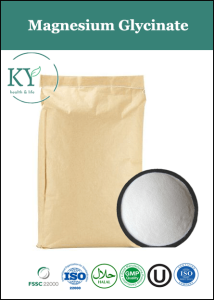
Why Are Magnesium Glycinate Capsules So Large?
The reason is simple: standard raw material magnesium glycinate has low magnesium content and low density.
The math:
-
Pure magnesium glycinate contains only about 11% elemental magnesium
-
The remaining 89% is glycine (a large amino acid molecule)
-
To deliver 100 mg of actual magnesium, you need nearly 1,000 mg of raw material
This low content forces manufacturers to use large capsules. Consumers find them hard to swallow, leading to poor compliance.
11% vs 13%: The Content Difference
The market standard for pure chelated magnesium glycinate is 11%. But Kangyo offers a 13% option – and that 2% difference matters more than you think.
| Comparison | 11% Content | 13% Content |
|---|---|---|
| Magnesium per gram | 110 mg | 130 mg |
| Raw material needed for 100 mg Mg | ~910 mg | ~770 mg |
| Material saving | – | 15% less |
With 13% content, you need 15% less raw material to achieve the same magnesium dose. Less powder means a smaller capsule.
The Density Factor: 0.8+ vs 0.5-0.6 g/mL
Content is only half the story. Density is equally important.
Standard raw material magnesium glycinate typically has a bulk density of only 0.5-0.6 g/mL. The powder is fluffy and takes up a lot of space.
Kangyo’s high-density raw material magnesium glycinate achieves 0.8+ g/mL – significantly higher than standard products.
What this means for your capsules:
-
Higher density = more powder fits into the same capsule volume
-
Combined with 13% content, the capsule size reduction is substantial
The Combined Effect: 11% vs 13% + High Density
Here is the real-world comparison for a 100 mg magnesium dose:
| Factor | Standard Product | Kangyo Product |
|---|---|---|
| Magnesium content | 11% | 13% |
| Bulk density | 0.5-0.6 g/mL | 0.8+ g/mL |
| Raw material needed | ~910 mg | ~770 mg |
| Powder volume | Large | ~40% smaller |
| Capsule size | Oversized | Significantly smaller |
By upgrading to 13% content and high-density (0.8+ g/mL) raw material magnesium glycinate, you can achieve the same magnesium dose in a much smaller, consumer-friendly capsule.
Why Capsule Size Matters
The big capsule problem directly affects your business:
-
30-40% of consumers struggle to swallow large capsules
-
Smaller capsules significantly improve daily compliance
-
Better compliance leads to higher re-purchase rates
Solving the big capsule problem means happier customers and better business results.
The big capsule problem is solved by switching to better raw material magnesium glycinate.
-
13% content (vs standard 11%) = 15% less material needed
-
High density (0.8+ g/mL) (vs 0.5-0.6) = smaller powder volume
Together, these improvements allow you to deliver the same magnesium dose in a significantly smaller capsule – improving consumer compliance and satisfaction.
Call-to-Action
Ready to solve the big capsule problem? Contact Kangyo today for samples and specifications of our 13% high-density raw material magnesium glycinate.
Link: