
For decades, calcium carbonate granules have been the go-to source in calcium supplements, praised for their high elemental calcium content and low cost. However, a significant shift is underway. Calcium citrate DC granular for tablet application is rapidly emerging as the superior alternative and the future of the calcium supplement market.
As a professional supplier of calcium supplement ingredients, Kangyo offers both high-quality calcium carbonate granules and calcium citrate DC granular, providing flexible formulation options to help customers develop next-generation calcium tablets.
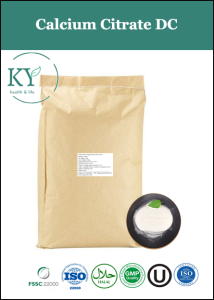
Calcium Carbonate Granules: The Traditional Choice
Calcium carbonate granules have long been widely used in various calcium tablets. Their main advantages include:
-
High elemental calcium content (~40%)
-
Lower raw material cost
-
Mature process technology and stable supply
Kangyo’s calcium carbonate granules feature excellent flowability and compressibility, suitable for both standard calcium tablets and multi-nutrient formulations.
Calcium Citrate DC Granular for tablet application: The Future Mainstream Choice
While calcium carbonate remains widely used, it has notable limitations. It requires stomach acid for absorption, meaning it must be taken with food and may be less effective for individuals with reduced gastric acidity, such as older adults or those on acid-reducing medications. In contrast, calcium citrate is acid-independent, offering consistent and reliable absorption regardless of meal timing or digestive health.
Kangyo’s Calcium Citrate DC Granular is specifically designed for tablet applications, delivering significant advantages in absorption, digestive comfort, and manufacturing efficiency.
Six Core Advantages of Calcium Citrate Over Calcium Carbonate
1. Higher Bioavailability
Multiple studies have shown that calcium citrate achieves higher absorption rates than calcium carbonate, whether taken with or without food. In older adults with reduced gastric acid secretion, calcium citrate can be over 20% more absorbable than carbonate.
2. Potential to Inhibit Kidney Stone Formation
Contrary to common belief, calcium citrate does not increase kidney stone risk. The citrate ion competes with oxalate in urine to bind calcium, thereby reducing the formation of calcium oxalate stones—offering a protective effect for stone-prone individuals.
3. No Interference with Iron or Other Mineral Absorption
At high doses, calcium carbonate may interfere with the absorption of divalent minerals such as iron and zinc. Due to its different absorption mechanism, calcium citrate does not significantly inhibit iron absorption, making it more suitable for individuals needing multiple micronutrient supplementation.
4. Fewer Drug Interactions
Calcium carbonate neutralizes gastric acid, which can affect the absorption of certain drugs (e.g., thyroid hormones, some antibiotics). Calcium citrate has minimal impact on gastric pH, thereby reducing the risk of drug interactions during long-term co-administration.
5. High Stability – Ideal for Direct Compression Processing
Calcium citrate does not readily absorb moisture or degrade during storage. Its granules maintain good flowability. Kangyo’s calcium citrate DC granular is especially suitable for high-speed direct compression processes, helping extend product shelf life and reduce excipient use.
6. No Carbon Dioxide Production – No Bloating or Gas
Calcium carbonate reacts with gastric acid. The released carbon dioxide gas can cause stomach bloating, belching, abdominal discomfort, and even acid reflux. In contrast, calcium citrate does not produce gas when reacting with stomach acid, resulting in a quieter, more comfortable digestive experience. This makes it especially suitable for individuals with sensitive gastrointestinal systems or those prone to bloating.
Kangyo: Your Professional Partner for Calcium Supplement Granules for tablet application
Kangyo is committed to providing high-quality calcium supplement ingredients to nutritional supplement manufacturers worldwide:
-
Calcium Carbonate Granules for tablet application: High purity, good flowability, suitable for standard tablet pressing
-
Calcium Citrate DC Granular for tablet application: Specifically designed for direct compression tablets—better absorption, more comfortable digestion, and more efficient processing
Whether you are developing existing calcium carbonate products or planning to expand into the future of calcium citrate formulations, Kangyo offers stable, reliable, and compliant granular raw materials with technical support.
Looking Ahead
As consumers become more educated about ingredient quality and efficacy, and with the global aging population and rising prevalence of digestive disorders, market demand is shifting toward premium, well-absorbed forms of calcium. Calcium citrate DC Granular for tablet application fits perfectly into this trend.
While calcium carbonate may persist in budget products, the future belongs to formulations that prioritize absorption, tolerability, and patient adherence—all areas where calcium citrate excels. For supplement manufacturers, Calcium Citrate DC Granular is not just an alternative; it is the clear next-generation standard.
The transition from calcium carbonate to calcium citrate is not merely incremental—it is transformative. With its superior absorption, digestive comfort, formulation flexibility, gas-free safety advantage, and alignment with modern health priorities, Calcium Citrate DC Granular is poised to dominate the future of calcium tablet applications.
Choose Kangyo for a better calcium supplement solution.
Link: